Technical Analysis

FortiOS 8.0 FortiAI Assistant Technical Insight

FortiOS 8.0 FortiAI Assistant Technical Insight

FortiOS 8.0 deeply embeds FortiAI-Assist into the FortiGate operating system for the first time, providing network security administrators with generative AI-powered operational assistance. This article provides a systematic deep analysis of FortiAI's technical architecture, deployment methods, business workflows, and licensing models based on FortiOS 8.0 official documentation.

FortiOS 8.0 Generative AI Detection Technology Deep Insight

FortiOS 8.0 Generative AI Detection Technology Deep Insight

FortiOS 8.0 introduces native detection and control capabilities for generative AI applications, providing enterprises with a complete AI visibility and control system through AIAP database, dedicated log fields, and FortiView components. This article provides detailed analysis of GenAI detection's technical architecture, deployment methods, and business workflows.

LLM-WAF Technical Analysis: The AI-Native Architecture of Next-Generation Web Application Firewalls

LLM-WAF Technical Analysis: The AI-Native Architecture of Next-Generation Web Application Firewalls

This article analyzes the emerging LLM-WAF technology in 2026. To counter LLM-specific attacks like Prompt Injection, WAFs are evolving towards AI-native architectures. Modern LLM-WAFs feature a three-layer design: traffic parsing, hybrid detection (rule engine + lightweight security LLM), and response enforcement. Key technologies include lightweight models, semantic feature extraction, and cloud-edge collaboration. The market is led by Cloudflare (edge hybrid), Palo Alto Networks (integrated module), and CrowdStrike (cloud-edge), with competition shifting from technical capability to ecosystem lock-in.

A Panoramic View of AI Inference Optimization Tools: From vLLM to TensorRT-LLM, A Selection Guide in a Fragmented Landscape

A Panoramic View of AI Inference Optimization Tools: From vLLM to TensorRT-LLM, A Selection Guide in a Fragmented Landscape

This report compares vLLM, TensorRT-LLM, and Intel Gaudi3 toolchain for AI inference. TensorRT-LLM leads in throughput on NVIDIA hardware but has high lock-in risk. vLLM excels in latency, flexibility, and hardware compatibility. Gaudi3 shows cost-effectiveness potential. Selection requires evaluating hardware, performance needs, TCO, and ecosystem risks, adopting a layered strategy and continuous monitoring.

NVIDIA Ising: Technical Insight into the World's First Open-Source Quantum AI Model

NVIDIA Ising: Technical Insight into the World's First Open-Source Quantum AI Model

NVIDIA open-sourced Ising, the world's first quantum AI model, fusing the Ising model with Transformer to simulate quantum computing on GPUs for combinatorial optimization. It claims 470x speedup over simulated annealing and advantages vs. IBM's quantum processor. NVIDIA's 'software-first' strategy uses open-source and CUDA-Q to lower barriers and build its ecosystem. However, it's classical simulation with limitations in generalization and scalability; performance claims require cautious interpretation.

Deep Analysis of CrowdStrike Falcon AI Threat Detection Engine 2026 Technical Evolution

Deep Analysis of CrowdStrike Falcon AI Threat Detection Engine 2026 Technical Evolution

This report analyzes the 2026 evolution of CrowdStrike's Falcon AI engine, designed to combat malware-less and AI-powered attacks. Key advancements include a multimodal behavior framework (97% detection, 35% lower resource use), few-shot learning for novel threats, and the Agentic MDR architecture enabling sub-29-minute automated response. The analysis compares competitors, highlighting the shift towards behavioral intent detection and response speed, and identifies open questions regarding automation transparency and data validation.

Analyzing Cisco's Full-Stack AI Agent Identity Security Architecture Layout Through Its Acquisitions of Galileo and Astrix

Analyzing Cisco's Full-Stack AI Agent Identity Security Architecture Layout Through Its Acquisitions of Galileo and Astrix

Cisco's rapid 2026 acquisitions of Galileo (AI observability) and Astrix (NHI management) aim to build the first claimed full-stack AI Agent identity security architecture. The six-layer model promises closed-loop management but faces questions on unverified performance claims, large-scale deployment viability, ecosystem openness, and migration costs amidst competition from Palo Alto, CrowdStrike, and Microsoft.

Technical Architecture Analysis of Palo Alto Prisma AIRS 3.0

Technical Architecture Analysis of Palo Alto Prisma AIRS 3.0

Palo Alto Prisma AIRS 3.0 is a dedicated architecture for AI Agent full lifecycle security. Its three-layer design covers asset discovery, scanning/testing, and runtime control. Core protection relies on the Agent Gateway control plane and Prisma Browser security sandbox. While excelling at known threat detection, its ability against unknown threats in complex environments requires validation. Its integrated lifecycle approach and high-performance control plane differentiate it from competitors like CrowdStrike and Zscaler, but market success hinges on real-world efficacy and integration.

Paradigm Shift in AI Security Offense and Defense Capabilities: From Auxiliary Tools to Independent Actors

Paradigm Shift in AI Security Offense and Defense Capabilities: From Auxiliary Tools to Independent Actors

AI security capabilities are shifting from auxiliary tools to independent offense/defense actors, exemplified by Claude's discovery of a critical Firefox vulnerability. This necessitates a shift to AI-driven, multi-layered automated adversarial verification architectures. Key technologies include LLM code comprehension, automated POC generation, and AI-vs-AI architectures. AI-native vendors, traditional security vendors, and cloud providers are competing with different approaches. In the mid-term, AI actors are likely to serve as 'super assistants' rather than full replacements for humans.

Optical Interconnect Replacing Copper Cables: The NVIDIA Rubin Roadmap and a New Paradigm for Computing Power Expansion

Optical Interconnect Replacing Copper Cables: The NVIDIA Rubin Roadmap and a New Paradigm for Computing Power Expansion

<p>This report analyzes the trend of NVIDIA&#039;s future Rubin platform integrating optical interconnects to replace copper cables. It constructs a layered architecture model, exploring key technologies like NVLink optical interconnects, Co-Packaged Optics (CPO), and copper-optical hybrid architectures. A process flow illustrates data movement with optical links in distributed training. The competitive analysis highlights NVIDIA&#039;s advantages via full-stack integration and aggressive CPO roadmap but notes challenges like cost, thermal management, and open ecosystems. Key judgments suggest initial Rubin implementations will be hybrid, with optical value shifting to efficiency/density, and cost being the main adoption barrier.</p>

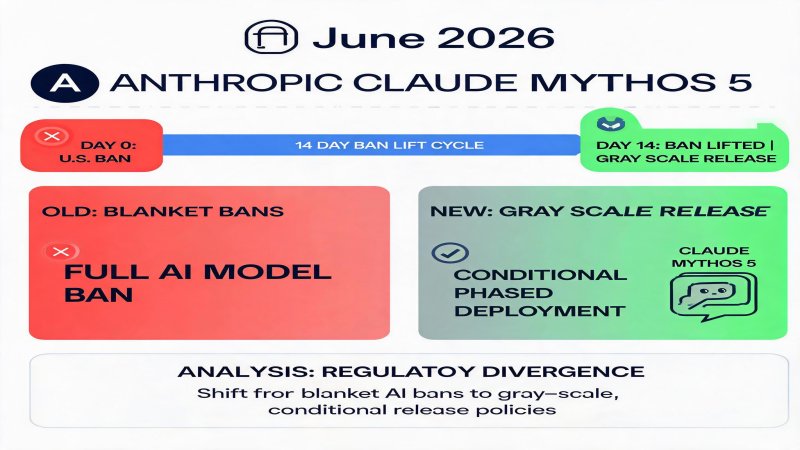
In-Depth Technical Analysis Report: Claude Mythos and Project Glasswing

In-Depth Technical Analysis Report: Claude Mythos and Project Glasswing

This report analyzes the four-layer AI security governance stack built by Claude Mythos and Project Glasswing. It features autonomous security agents using multimodal Transformers and reinforcement learning, hardware-accelerated privacy computing, and a standardized alliance framework for end-to-end automated defense. Key strengths are its adaptive, evolutionary defense concept and open ecosystem. Major open challenges include the RL simulation-reality gap, trust/privacy in alliance collaboration, automation accountability, and adversarial risks against the defensive AI itself.

Intel's AI Infrastructure Counteroffensive: A Deep Technical Analysis of the CPU+IPU Heterogeneous Architecture

Intel's AI Infrastructure Counteroffensive: A Deep Technical Analysis of the CPU+IPU Heterogeneous Architecture

This report provides a deep technical analysis of Intel's "CPU+IPU" heterogeneous architecture for AI data centers. It details how the IPU layer enables hardware offload, resource isolation/composability, and AI-optimized communications, supported by the unified OneAPI/IPDK software stack. The analysis covers technical principles, workflows, and highlights key challenges including performance validation, third-party GPU interoperability, software maturity, and the practical hurdles of deploying large-scale composable infrastructure.